Functional network organizations of two contrasting temperament groups in dimensions of novelty seeking and harm avoidance
Brain Research 1575, 33-44
한글 요약
클로닌저 성격 모델의 두 주요 기질 차원인 자극 추구와 위험 회피가 뇌의 기능적 연결망 구성과 어떻게 관련되는지 살핀 연구입니다. 두 기질 점수의 부적 상관에 근거해 참가자를 「높은 위험 회피·낮은 자극 추구」와 「낮은 위험 회피·높은 자극 추구」 두 집단으로 군집화하고, 휴지기 fMRI에 그래프 이론을 적용해 전뇌 연결망의 모듈 구조를 비교했습니다. 위험 회피가 높은 집단에서는 전전두엽 같은 조절 영역이 변연계와 하나의 모듈로 묶였고, 자극 추구가 높은 집단에서는 전전두엽과 기저핵 등 도파민 경로 위의 영역들이 함께 묶였습니다. 이는 억제적이고 수동적인 행동 성향이 전전두엽과 변연계 사이의 강화된 연결망 결합에서 비롯될 수 있음을 시사하며, 기능적 연결 밀도와 회백질 부피 분석에서도 두 집단의 위상적 차이가 뒷받침되었습니다.
초록 (English)
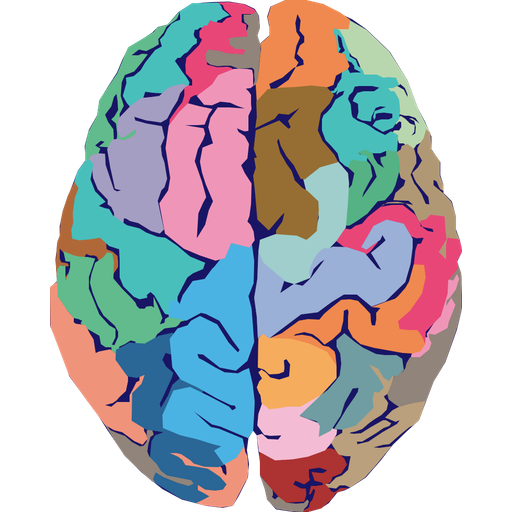
Novelty seeking (NS) and harm avoidance (HA) are two major dimensions of temperament in Cloninger׳s neurobiological model of personality. Previous neurofunctional and biological studies on temperament dimensions of HA and NS suggested that the temperamental traits have significant correlations with cortical and subcortical brain regions. However, no study to date has investigated the functional network modular organization as a function of the temperament dimension. The temperament dimensions were originally proposed to be independent of one another. However, a meta-analysis based on 16 published articles found a significant negative correlation between HA and NS (Miettunen et al., 2008). Based on this negative correlation, the current study revealed the whole-brain connectivity modular architecture for two contrasting temperament groups. The k-means clustering algorithm, with the temperamental traits of HA and NS as an input, was applied to divide the 40 subjects into two temperament groups: 'high HA and low NS' versus 'low HA and high NS'. Using the graph theoretical framework, we found a functional segregation of whole brain network architectures derived from resting-state functional MRI. In the 'high HA and low NS' group, the regulatory brain regions, such as the prefrontal cortex (PFC), are clustered together with the limbic system. In the 'low HA and high NS' group, however, brain regions lying on the dopaminergic pathways, such as the PFC and basal ganglia, are partitioned together. These findings suggest that the neural basis of inhibited, passive, and inactive behaviors in the 'high HA and low NS' group was derived from the increased network associations between the PFC and limbic clusters. In addition, supporting evidence of topological differences between the two temperament groups was found by analyzing the functional connectivity density and gray matter volume, and by computing the relationships between the morphometry and function of the brain.