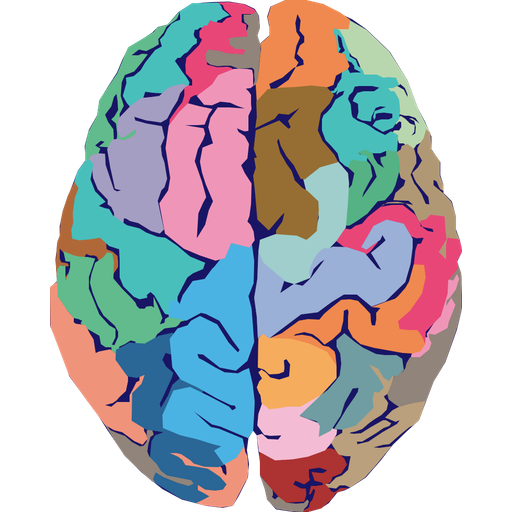
Inter-species cortical registration between macaques and humans using a functional network property under a spherical demons framework
PLOS ONE 16(10), e0258992교신저자 논문
한글 요약
사람과 원숭이(마카크)의 대뇌피질을 기능적 상동성에 기반해 정합하는 새로운 방법을 제안한 연구입니다. 종 간 피질 비교에는 두 종의 상응하는 영역을 맞추는 정합이 필수적인데, 기존에는 구조적 표지나 생물학적 특징만 쓰고 기능적 상동성에는 충분히 주목하지 않았습니다. 이 연구는 두 종의 휴지기 fMRI로부터 피질 영역 간 기능적 연결성 행렬과 그 주성분 같은 연결망 특성을 계산하고, 이를 바탕으로 구면 데몬(spherical demons) 기법으로 피질 간 변형장을 반복 추정하면서 마카크의 영역 구획 지도를 사람의 다중모달 구획 지도에 맞게 갱신하는 방식입니다. 구조적 특징 기반 정합과 비교했을 때 기능적 상동성에서 개인 간 변동성과 좌우 반구 비대칭이 더 크게 나타났고, 이는 마카크보다 사람에서 더 컸습니다. 종 안에서의 개인 간 비교와 종 간 비교 모두에서 기능적 연결망에 기반한 피질 정합이 중요함을 강조한 연구입니다.
초록 (English)
Systematic evaluation of cortical differences between humans and macaques calls for inter-species registration of the cortex that matches homologous regions across species. For establishing homology across brains, structural landmarks and biological features have been used without paying sufficient attention to functional homology. The present study aimed to determine functional homology between the human and macaque cortices, defined in terms of functional network properties, by proposing an iterative functional network-based registration scheme using surface-based spherical demons. The functional connectivity matrix of resting-state functional magnetic resonance imaging (rs-fMRI) among cortical parcellations was iteratively calculated for humans and macaques. From the functional connectivity matrix, the functional network properties such as principal network components were derived to estimate a deformation field between the human and macaque cortices. The iterative registration procedure updates the parcellation map of macaques, corresponding to the human connectome project's multimodal parcellation atlas, which was used to derive the macaque's functional connectivity matrix. To test the plausibility of the functional network-based registration, we compared cortical registration using structural versus functional features in terms of cortical regional areal change. We also evaluated the interhemispheric asymmetry of regional area and its inter-subject variability in humans and macaques as an indirect validation of the proposed method. Higher inter-subject variability and interhemispheric asymmetry were found in functional homology than in structural homology, and the assessed asymmetry and variations were higher in humans than in macaques. The results emphasize the significance of functional network-based cortical registration across individuals within a species and across species.